
Freight & Cargo
Elevator Manufacturer
MR freight elevators · MRL freight elevators · car elevators · industrial cargo lifts for global distributors
Hosting Elevator supplies fully customizable freight and cargo elevators to distributors, contractors, and industrial developers across Europe, the Americas, the Middle East, and Southeast Asia. MR & MRL Series freight lifts — traction and drum drive — available at OEM/ODM pricing with 4–8 week lead times, full CE certification, and capacity up to 5,000 kg.
_1775539563_WNo_857d516.jpg)
_1775539584_WNo_427d344.jpg)
_1775539602_WNo_427d344.jpg)
Freight & Cargo
|
All Freight Elevators → |
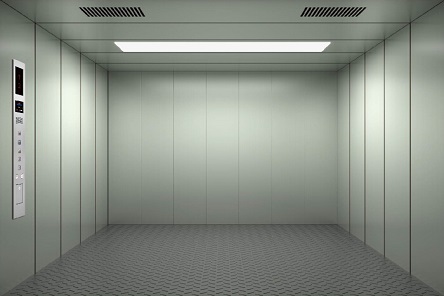 Machine Room Machine Room
MR Freight Elevators
Traditional machine room freight elevator with high load capacity and robust traction drive. Ideal for heavy industrial applications requiring reliable, high-cycle operation.
Capacity: 1,000–5,000 kg Traction Drive CE Certified OEM / ODM
View Details → |
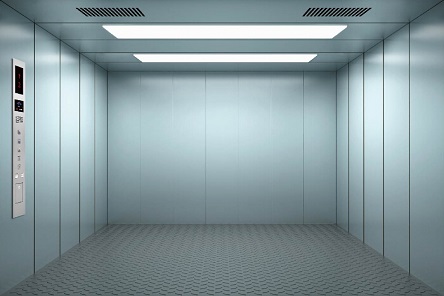 Machine Room-Less Machine Room-Less
MRL Freight Elevators
Machine room-less design saves building space while delivering full freight capacity. Compact drive unit installed in the hoistway — perfect for buildings with space constraints.
Capacity: 1,000–3,000 kg MRL Drive Space Saving OEM / ODM
View Details → |
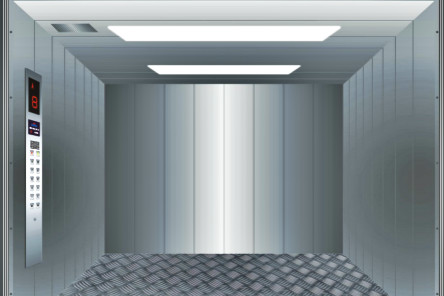 Automobile Automobile
Car Elevators
Purpose-built for transporting passenger vehicles between floors in parking garages, showrooms, and multi-storey facilities. Wide platform, low pit depth, smooth ride.
Load: Up to 5,000 kg Wide Platform Low Pit Depth OEM / ODM
View Details → |
| Need a custom freight elevator solution? Request a Quote → |
|
Classes of Freight Elevator
Freight elevators are classified by their loading method and intended use. Selecting the right class ensures your elevator is engineered for the actual loads and equipment used on your site.
Load is distributed across the platform. No single piece exceeds one quarter of the elevator's rated capacity. Cargo is handled on and off the car manually or by hand truck — no powered vehicles involved.
Used solely to carry automobiles or light trucks up to the elevator's rated capacity. The vehicle drives onto the platform under its own power. Platform dimensions and floor capacity are engineered for full vehicle weight distribution.
A four-wheeled industrial vehicle — such as a pallet jack — may roll onto the platform as a single unit. The combined weight of vehicle plus load must not exceed the rated capacity at any point during loading or transit.
During loading and unloading, the platform may carry up to 150% of the rated capacity momentarily. This allows a forklift to deposit freight weighing up to the full rated capacity while the forklift itself is partially on the platform.
Covers all other forms of powered industrial truck loading not defined by C1 or C2. The rated capacity must never be exceeded at any moment during the loading, transit, or unloading process. Structural design accounts for dynamic impact loads from powered vehicles.
| Capacity | 630 kg — 5,000 kg |
| Speed | 0.25 m/s · 0.5 m/s · 1.0 m/s |
| Max. Travel | 50 m |
| Max. Stops | 3 — 6 floors |
| Class Loading | A B C1 C2 C3 |
| Drive System | Electric Drum / Traction |
| Power Supply | 208 V — 3 Phase |
| Certification | CE / ISO / Custom |
| Lead Time | 4 — 8 weeks (OEM/ODM) |
Frequently Asked Questions
Everything you need to know about freight elevator specifications, ordering, and installation — answered by our engineering team.
Our standard freight elevator range covers 630 kg to 5,000 kg. For applications exceeding 5,000 kg — such as heavy manufacturing or large vehicle transport — we provide fully custom-engineered solutions. Capacity is determined by your load type, frequency of use, and platform size requirements.
MR (Machine Room) elevators house the drive machinery in a dedicated room above the hoistway. They support higher loads and longer travel distances. MRL (Machine Room-Less) elevators integrate the drive unit inside the hoistway, saving floor space and reducing construction costs — ideal for buildings where a machine room is not practical.
Yes. Class C2 freight elevators are engineered specifically for forklift loading. During loading and unloading, the platform can momentarily carry up to 150% of the rated capacity, allowing the forklift to deposit freight at full rated load. Class C1 supports four-wheeled pallet jacks where combined vehicle and load must not exceed rated capacity.
All Hosting freight elevators are CE certified and manufactured to ISO quality standards. We can provide full compliance documentation for local inspection and permit approval in your destination market. Additional certifications for specific regions — including the Middle East, Southeast Asia, and the Americas — are available on request.
We offer a full range of door options to suit your loading equipment and workflow. Car door options include slide-up and bi-parting configurations. Landing door options include vertical slide-up, swing, and vertical bi-parting doors. Our engineering team will recommend the right combination based on your forklift turning radius, platform size, and throughput requirements.
Yes. Hosting Elevator is a top 10 elevator manufacturer in China with full OEM and ODM capability. We supply freight elevators to distributors, contractors, and branded elevator companies worldwide — including FUJITEC and SCHINDLER. Custom branding, specifications, and configurations are all supported with shop drawing approval before production begins.
Standard configurations typically ship within 4 to 6 weeks after shop drawing approval. Custom or special-order models — including explosion-proof, high-capacity, or non-standard platform sizes — may require 6 to 10 weeks. We accept T/T and L/C payment terms and can provide export packaging to any port worldwide.
Yes. We supply dust-proof and explosion-proof freight elevator configurations for use in chemical plants, paint facilities, grain storage, and other hazardous environments. These units meet the relevant ATEX or equivalent local standards. Please specify your hazardous zone classification and environment when requesting a quote.
The class is determined by how cargo is loaded and unloaded, not just by weight. If your team moves goods manually or with hand trucks, Class A applies. If you transport vehicles, choose Class B. For pallet jacks where combined vehicle and load stay within rated capacity, select Class C1. If you use a forklift to deposit loads, requiring momentary platform overload during the loading cycle, you need Class C2. Class C3 covers all other powered industrial truck types where rated capacity must never be exceeded. Our team can review your workflow and specify the correct class — contact us with your load type, equipment, and cycle frequency.