
Hospital/Bed elevator Manufacturing & Solution
Provide the Best Solution
From the perspective of transporting patients, HOSTING series bed elevators apply environment-friendly permanent magnet synchronous gearless traction system and mature frequency conversion control technology to enable the starting& braking of elevators to be stable and smooth. In terms of design, HOSTING bed elevators can meet various special using demands in hospital to the greatest extent, and thus create sweet and comfortable riding space for both doctors and patients
Request a Quote Today
View Project
Enter your inquiry details, We will reply you in 24 hours.
Name can't be empty
E-mail can't be empty
Company can't be empty
Phone can't be empty
Phone
Products can't be empty
Products you want
Message can't be empty
Submit Request
Durable Hospital for Sale
As a leading manufacturer of home/residential elevators, we provide high-quality and cost-effective products to real estate developers and dealers around the world plan.The one-stop service from installation to maintenance can meet the mobility needs of various applications from residential to commercial and shopping malls to airports. Our solutions for your building range from highly standardized functions to fully customized elevators.


Leading Residential Elevator Products

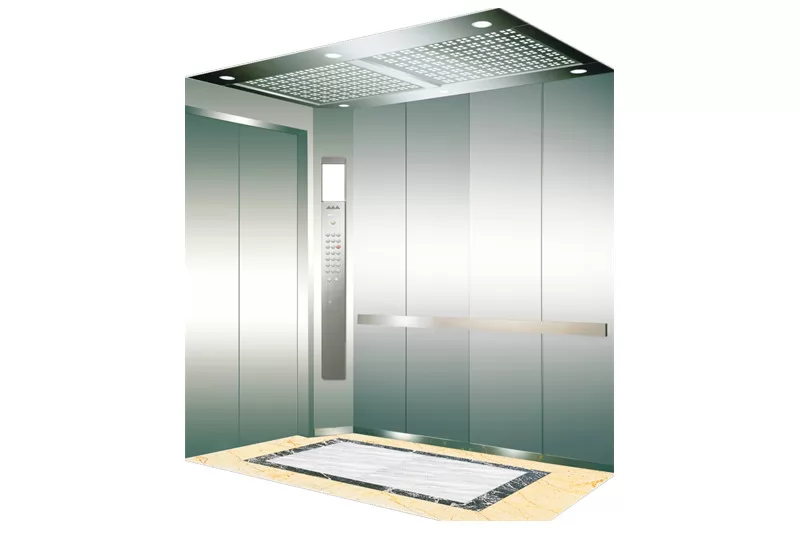
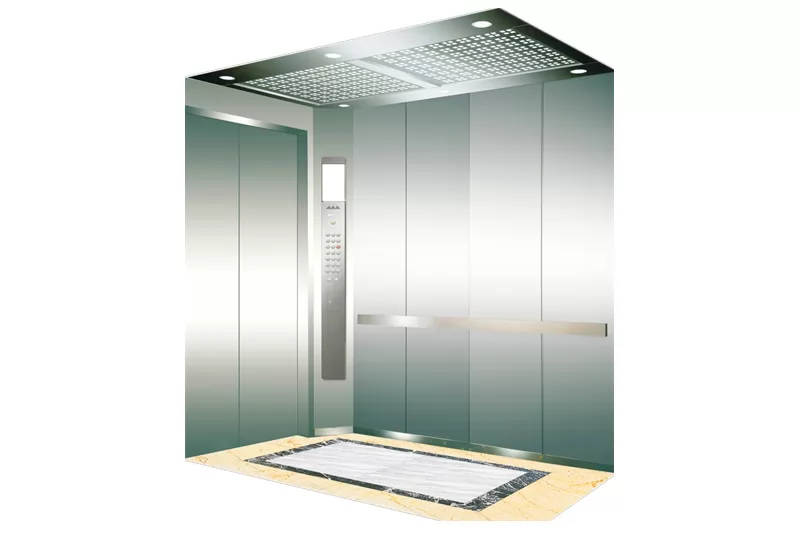
Hospital Elevator Specifications
Designed for modern healthcare facilities. Optimized for patient transport, medical equipment handling, and high-frequency hospital operation.
Rated Load
1600 – 2000 kg (Standard 1800 kg)
Capacity
Up to 20 persons
Max. Travel
Up to 90 m
Group Control
Up to 8 elevators
Performance Parameters
| Rated Speed | |
| Rated Load | |
| Drive System | AC traction with Permanent Magnet Synchronous Motor |
| Control System | VVVF frequency conversion control + PLC intelligent control |
| Safety System | Full-height infrared light curtain + Automatic Rescue Device (ARD) |
| Application | Hospitals · Clinics · Medical Centers · Healthcare Buildings |
All specifications can be customized according to hospital building requirements, including larger cabin size for stretcher transport and special cleanroom configuration.
Our Partners
Who We Serve
We specialize in manufacturing and supplying hospital elevators designed for safe, efficient and hygienic patient transportation across global healthcare projects.
Medical Elevator Engineering Companies
Complete hospital elevator systems for patient beds and medical equipment, including anti-bacterial cabin materials, smooth leveling control, and integration with hospital building management systems.
Medical Equipment Distributors & Dealers
Reliable supply of hospital elevators compatible with stretchers and ICU beds, offering standardized models, emergency operation modes, and long-term spare parts support for healthcare facilities.
International Healthcare Project Contractors
Full export solutions for hospital elevator systems, including medical-grade certifications, infection control design standards, documentation, and global logistics support.
Hospital Design & Planning Consultants
Professional collaboration on elevator layout for hospitals, including separation of clean and dirty traffic, emergency priority systems, and optimized vertical transportation for patients and staff.
Hospital Developers & Construction Contractors
Customized hospital elevators for general hospitals, clinics, and medical centers, designed for high-frequency use, quiet operation, and reliable performance in critical healthcare environments.
Project Information Required
Please provide detailed hospital elevator requirements. Our engineering team will deliver a precise and compliant solution tailored to medical use scenarios.
- Hospital type (general hospital, clinic, medical center, ICU facility)
- Elevator type (bed elevator, passenger elevator, service elevator)
- Cabin size suitable for stretchers/ICU beds and door opening type
- Load capacity, speed, number of floors, stops and shaft dimensions
- Local medical standards, fire safety requirements, and hygiene specifications
Our Advantages
Features of Our Hospital Elevators
Whether you operate a specialized clinic, a nursing home, or a large general hospital, our elevators are designed to meet the many critical needs of your patients and staff.
_1769771346_WNo_400d400.png)
Heavy-Duty Capacity for Bed and Equipment Transport
NBJ-101 hospital elevator supports up to 1800kg load capacity (approximately 20 persons), making it suitable for hospital beds, stretchers, and large medical equipment. Designed for high-frequency use in multi-story healthcare buildings with a maximum travel height of 90m.
_1769771366_WNo_400d400.png)
Smooth Operation up to 1.5 m/s
With a maximum running speed of 1.5 m/s and advanced VVVF frequency conversion control, the elevator ensures smooth acceleration and braking. Reduced vibration and precise leveling improve safety for patients in critical condition.
_1769771494_WNo_400d400.png)
Intelligent Group Control for High Traffic Hospitals
Supports up to 8 elevators in group control operation, optimizing dispatch efficiency during peak hours and emergency situations. Improves patient transfer speed between operating rooms, ICUs, and wards.
_1769771509_WNo_400d400.png)
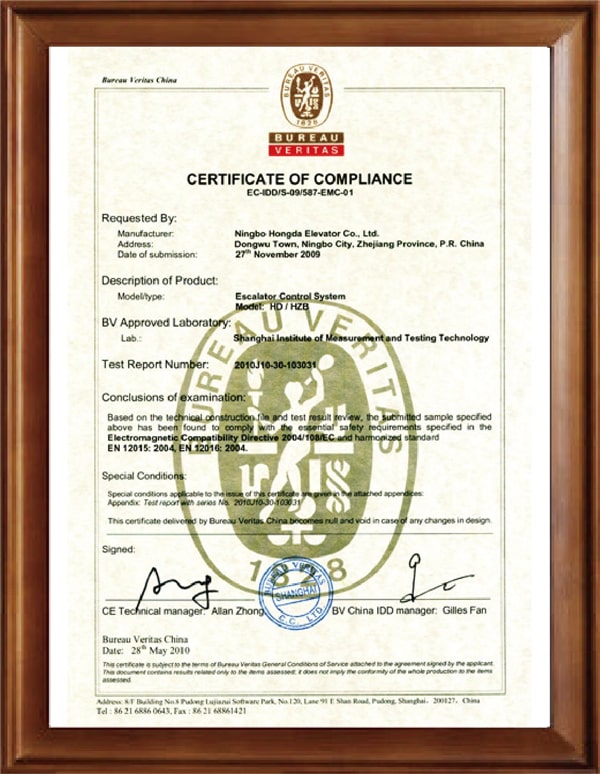
Electromagnetic Compatibility Protection
The PLC control system complies with electromagnetic compatibility standards, preventing signal interference with sensitive hospital equipment such as monitoring systems and imaging devices. Ensures stable and reliable operation in complex medical environments.
_1769771521_WNo_400d400.png)
Full-Height Infrared Light Curtain Protection
Equipped with a high-sensitivity infrared light curtain forming a full-height safety barrier at the door entrance. Rapid response prevents door collision with patients, beds, or medical carts, ensuring safer entry and exit.
_1769771533_WNo_400d400.png)
Emergency Rescue Device for Power Failure
Integrated automatic rescue device (ARD) with rechargeable battery backup. In case of sudden power outage, the elevator automatically moves to the nearest floor and opens the doors to evacuate passengers safely.
Quality Assurance
Our Certifications
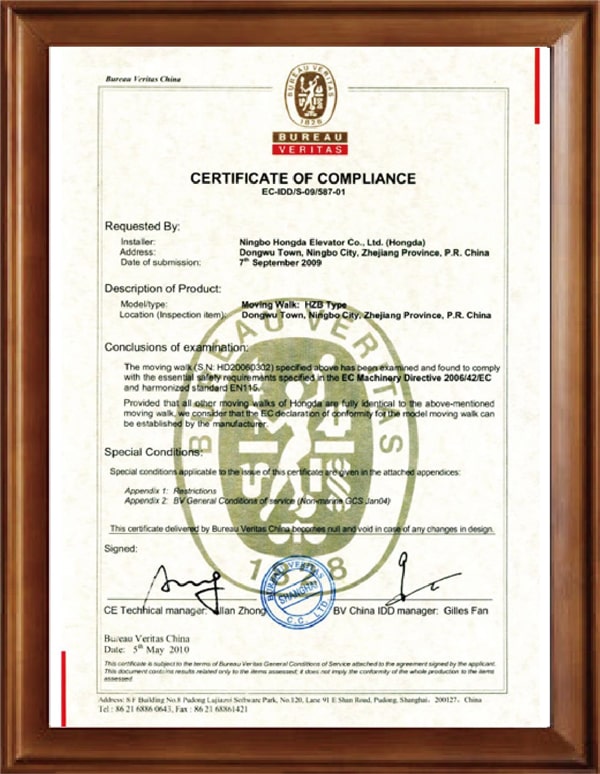
Internationally recognized certifications that guarantee quality, safety, and reliability in every elevator we produce.


FAQ
Frequently Asked Questions
Find answers to common questions about our elevator products and services.
How much does a hospital elevator cost?
The cost of a hospital elevator depends on load capacity (e.g. 1600kg–2500kg for bed elevators), number of floors, travel height, cabin size for stretchers, door configuration, and medical-grade requirements. Features such as antibacterial materials, smooth start-stop control, and emergency systems will also affect pricing. Contact us for a detailed quotation based on your hospital project drawings.
What size elevator is required for hospital beds?
Hospital bed elevators typically require a cabin size of at least 1400mm × 2400mm or larger to accommodate stretchers, ICU beds, and medical staff. The door opening is usually center-opening with a width of 1100mm–1400mm to ensure smooth patient transport.
What types of elevators are used in hospitals?
Hospitals typically use bed elevators, passenger elevators, service elevators, and sometimes dedicated emergency elevators. Bed elevators are specially designed for patient transport, while service elevators handle medical equipment, food, and supplies.
What safety features are required for hospital elevators?
Hospital elevators must include smooth leveling for patient comfort, emergency power backup, overload protection, automatic rescue devices, and fire emergency operation. Additional features such as antibacterial cabin surfaces and touchless control systems are also widely required in modern healthcare facilities.
Do hospital elevators need to meet specific standards?
Yes, hospital elevators must comply with local and international standards such as EN 81, ISO, or other regional medical building regulations. These standards ensure safety, accessibility, hygiene, and reliable operation in healthcare environments.
How long does it take to manufacture a hospital elevator?
The production time for hospital elevators is typically 4–6 weeks after confirming technical drawings. Projects requiring custom cabin sizes, special medical features, or strict compliance standards may require additional time.
How long does hospital elevator installation take?
Installation usually takes 10–20 days depending on the number of floors, shaft conditions, and site readiness. Hospital projects may require additional time for system testing and compliance inspections.
Do hospital elevators require a machine room?
Modern hospital elevators are often designed as machine-room-less (MRL) systems to save space. However, the final configuration depends on building design, load requirements, and local regulations.
Ready to Start Your Hospital Elevator Project?
Contact our team today for a detailed quotation tailored to your hospital elevator requirements, including bed elevators, patient transport solutions, and medical-compliant designs. We respond within 24 hours with professional engineering support.
overseas@nbxd.com
+86 18100133609
24/7 Technical Support for Medical Projects